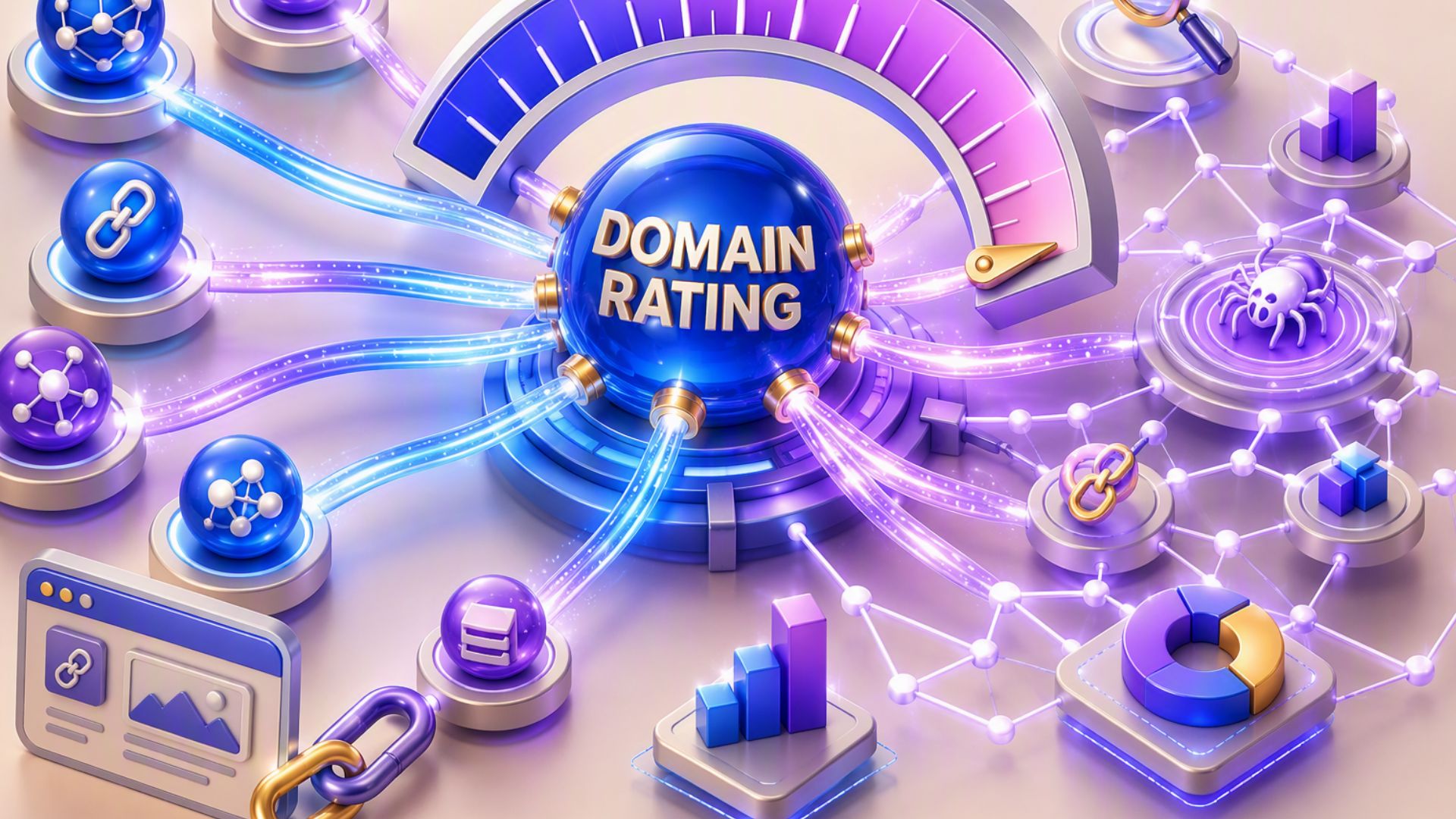

Backlinks play a major role in how search engines and SEO platforms evaluate a website’s reputation. When credible websites link to a domain, those links can signal relevance, trust, and topical expertise. Yet backlink value depends on far more than quantity. This article explains how backlinks influence Domain Authority, which links carry the most weight, what weakens a backlink profile, and how websites can earn stronger links without relying on risky tactics.
What Domain Authority Actually Measures
Domain Authority, often shortened to DA, is a scoring metric developed by Moz. It predicts how likely a website is to rank in search results compared with other domains. Scores range from 1 to 100, with higher numbers indicating stronger ranking potential.
DA is not a ranking factor used directly by Google. Google does not assign or publish Domain Authority scores. SEO professionals use DA as a comparative measurement when reviewing competitors, evaluating backlink opportunities, or tracking the relative strength of a website.
The score is calculated using several signals, with linking root domains and backlink quality playing major roles. A website earning links from several trusted domains will usually have stronger authority than one receiving hundreds of links from a small group of weak sites.
DA works on a logarithmic scale. Moving from a score of 10 to 20 is generally easier than moving from 70 to 80. This means websites should view Domain Authority as a benchmark rather than a fixed target. A useful comparison focuses on direct search competitors operating within the same industry, location, or content category.
Why Backlinks Affect Domain Authority
A backlink is created when one website links to a page on another domain. Search engines can treat that link as a signal that the destination contains useful or relevant information. SEO tools examine these connections when estimating the authority and ranking potential of a domain.
Links from reputable websites can strengthen Domain Authority because they transfer a degree of credibility. For example, a link from a respected industry publication carries more weight than a link from an unrelated directory with little traffic or editorial review.
The number of unique websites linking to a domain also matters. Ten backlinks from ten credible domains may offer more value than one hundred links from the same website. A diverse referring domain profile indicates that multiple domain sources consider the content worth mentioning.
Backlinks can also help search engines discover new pages. When search crawlers follow links from established sites, they may find and index the linked content faster. Strong internal linking can then distribute that authority across important service pages, category pages, and informational resources.
The Backlink Qualities That Matter Most
Not every backlink has the same influence. The source, placement, context, and destination all affect its value.
Relevance is one of the strongest factors. A link from a website covering the same industry or a closely related subject sends a clearer topical signal. A roofing company, for example, gains more SEO value from a construction publication than from an unrelated entertainment blog.
The authority of the referring domain also matters. Links from established websites with credible content, real readership, and healthy backlink profiles tend to carry more weight. A strong site does not need an extremely high DA to provide value. It needs to be legitimate, relevant, and trusted within its field.
Link placement affects visibility and context. Editorial links placed naturally within the main body of an article are generally more meaningful than links hidden in footers, sidebars, author boxes, or large directory pages.
Anchor text also provides context. Descriptive anchor text can help search engines understand the subject of the linked page. Exact-match anchor text should not appear excessively, since an unnatural pattern may look manipulative. A healthy anchor profile often includes brand names, page titles, partial keyword phrases, and natural references.
Quality Matters More Than Backlink Volume
Large backlink numbers can look impressive, but volume alone does not create strong Domain Authority. Thousands of low-value links may contribute little and can make a backlink profile appear artificial.
Weak links often come from automated directories, private blog networks, scraped pages, comment spam, unrelated websites, or domains created mainly to publish paid links. These sources rarely provide meaningful referral traffic or editorial value.
A smaller collection of relevant, earned backlinks is usually more beneficial. One link from a trusted publication can influence authority more than hundreds of links from low-quality pages.

Websites should also consider whether linking pages are indexed, active, and visible to real readers. A backlink from an abandoned page with no traffic offers limited practical value. Links placed within useful content can improve authority while sending qualified visitors directly to the website.
SEO teams should avoid judging link opportunities using DA alone. Traffic estimates, topical relevance, content quality, outbound link patterns, and site reputation should also be reviewed. A high DA score does not guarantee that every link from that domain is valuable.
How to Earn Backlinks That Strengthen Authority
Here are the main ways backlinks influence Domain Authority:
- Links from trusted websites can strengthen a domain’s credibility.
- Relevant backlinks provide stronger topical signals.
- Links from diverse domains carry more value than repeated links from one site.
- Natural anchor text helps search engines understand the linked page.
- Spammy or unrelated links offer little SEO value.
A strong backlink profile focuses on relevance, source quality, natural placement, and genuine editorial value rather than simply collecting as many links as possible.
Tracking Domain Authority and Backlink Growth
Domain Authority should be reviewed alongside organic rankings, referring domains, traffic, and conversions. A rising DA score can signal a stronger backlink profile, but it does not automatically mean a website is earning more customers or ranking for valuable search terms.
Tracking the number of quality referring domains often provides a more useful view than counting total backlinks. Website owners should monitor new links, lost links, anchor text patterns, and the relevance of linking pages.
Sudden increases in poor-quality links should also be reviewed. Spam links can appear without the website owner creating them. Most random spam links do not require immediate action, though suspicious patterns tied to deliberate link manipulation deserve closer analysis.
Progress should be compared with websites competing for the same search results. A DA score of 35 may be strong in one niche and weak in another. Competitive context makes the metric more useful.
Conclusion
Backlinks influence Domain Authority through relevance, source quality, referring domain diversity, placement, and editorial value. Strong results come from earning credible mentions rather than collecting the largest possible number of links. DA remains most useful as a comparison metric paired with rankings, traffic, and business results.
pagewoo.com helps brands create SEO content designed to earn attention, links, and stronger search visibility. Its content-focused approach connects keyword research, useful information, and natural on-page optimization, giving websites a stronger foundation for link acquisition and long-term organic performance.