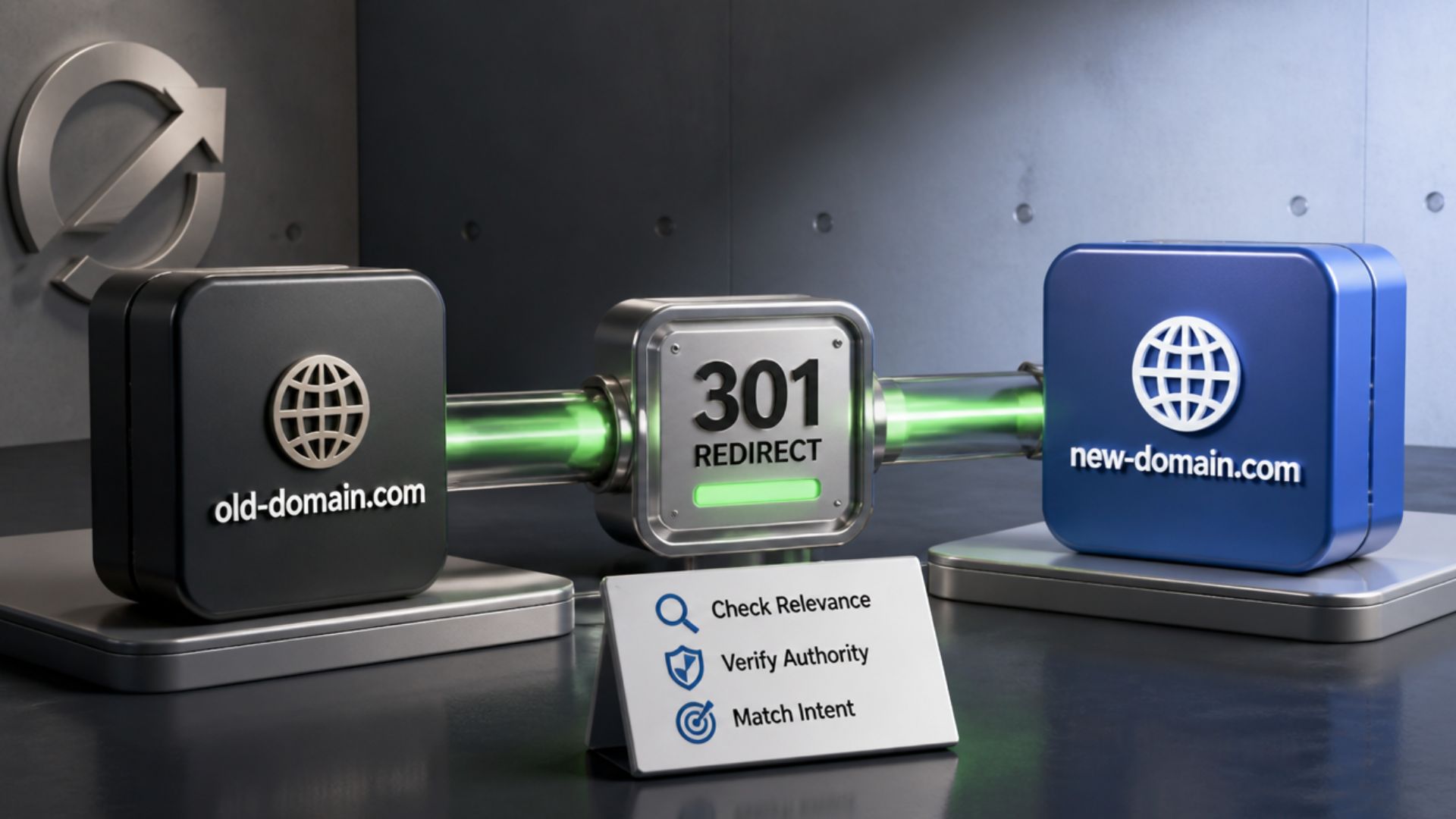

An aged domain can come with years of history, but that history is not always an asset. A name that once hosted a legitimate business may later have been parked, repurposed, or used for manipulative SEO. Its backlink profile can tell a similar story: impressive numbers may hide weak or artificial links. Before treating an aged domain as a valuable acquisition, its history and current condition need to be verified. Performing due diligence provides a structured way to examine what happened, assess what remains, and uncover problems that may not be visible from basic metrics alone.
What Does Due Diligence on an Aged Domain Mean?
Due diligence on an aged domain means investigating its history and current condition before deciding whether it is worth pursuing. The process is not limited to confirming the name’s age or checking a few authority metrics. It is about verifying the information behind those signals and identifying anything that could affect its value or create problems later.
A proper review looks at four main areas:
- History: Determine how the domain was used over time and whether its previous purpose was legitimate.
- SEO profile: Examine backlinks, anchor text, organic traffic, and search visibility to understand the strength and quality of its existing signals.
- Risks: Look for spam, manual actions, security issues, suspicious activity, and other potential liabilities.
- Relevance: Consider whether its historical topic, reputation, and existing links make sense for the intended use.
The purpose is not to find a single metric that labels an aged domain as good or bad. It is to build enough evidence to understand what you are dealing with and make an informed decision.
Verify the Domain’s Registration and Ownership History
Start by verifying when the domain was first registered and whether there were significant gaps in its registration history. For generic top-level domains, RDAP (Registration Data Access Protocol) is now the authoritative source for registration data, following ICANN’s transition from WHOIS in January 2025. Available records can provide registration dates, registrar information, and domain status, although privacy protections may limit ownership details.
Registration age is useful for establishing a timeline, but it does not demonstrate that the domain was continuously active or valuable. Look for expiration and re-registration periods, then compare them with other historical evidence. A name registered for 15 years but repeatedly dropped and repurposed has a different history from one that consistently supported a legitimate website. These gaps do not automatically make it a poor candidate, but they warrant closer investigation.
Investigate the Domain’s Historical Use
Reviewing how an aged domain was used in the past can reveal problems that current SEO metrics cannot. Use the Wayback Machine to examine snapshots from different periods and identify the types of websites, content, and businesses previously associated with the name. Look for a consistent and legitimate purpose, but also note major changes such as a shift from a genuine business or publication to unrelated affiliate pages, automatically generated content, gambling or pharmaceutical spam, parked pages, or hacked content. Pay particular attention to periods immediately before and after major changes in registration or ownership.
The goal is not to reject a domain simply because its history changed. Websites can legitimately change ownership, branding, or subject matter. Instead, assess whether the changes form a pattern that suggests manipulation or abuse. A long-established site followed by a short period of spam deserves closer scrutiny, especially if that period coincides with a sharp change in backlinks or search visibility. Historical use should be considered alongside the backlink profile, traffic data, and other evidence rather than treated as a standalone verdict.
Audit the Aged Domain’s SEO Profile
An aged domain’s SEO profile should be evaluated through the quality and context of its signals, not a single authority score. Start with the backlink profile and examine the sources behind the numbers. Pay particular attention to:
- Referring domains: Look at the quality, relevance, and diversity of the sites linking to it.
- Link placement: Favor genuine editorial mentions over sitewide, profile, comment, or directory links.
- Link relevance: Check whether important backlinks relate naturally to the site’s historical subject.
- Anchor text: Look for a reasonable mix of branded, URL, generic, and topical anchors. Unexplained concentrations of commercial or exact-match anchors can warrant closer investigation.
- Authority metrics: Use metrics such as Domain Rating, Domain Authority, Trust Flow, or Citation Flow for initial screening, but do not treat them as proof of search value. These are third-party measurements, not Google ranking scores.
Then review the domain’s search performance and indexation. Examine historical organic traffic, ranking keywords, and the pages that previously attracted search visitors. Look for sharp or unexplained declines and determine whether the traffic was relevant to the site’s actual subject. Check current indexation for unusual or irrelevant pages, and use Google Search Console, when available, to review search performance and site-level issues. Historical traffic and rankings demonstrate past visibility, not a guarantee of future performance.

Check for Search, Spam, and Security Risks
An aged domain can carry problems that are not obvious from its current backlink profile or registration history. If you have access to Google Search Console, check the Manual Actions report for violations that Google has identified. Also review the site’s security status for signs of hacking or other issues. A previous ranking decline, lack of indexation, or a history of spam should not automatically be described as a Google penalty, because these conditions can have different causes and require separate investigation.
Check the historical record for spam, malicious redirects, hacked pages, phishing, or malware, particularly during periods when the site changed ownership or purpose. Google’s current spam policies also identify expired domain abuse as the use of an expired domain primarily to manipulate search rankings with low-value content. However, Google states that using an old domain for a new, original site that provides value to users is not inherently a violation. The objective is therefore to identify genuine risks and understand their context, rather than reject a domain based on an isolated historical issue.
Assess Topical Relevance and Intended Use
An aged domain’s history should make sense in relation to how you intend to use it. Compare the subjects it covered in the past with the proposed website or business, paying particular attention to whether its strongest backlinks came from relevant sources. A site that previously served a closely related audience may have more contextual value than one with a completely unrelated history, even if both have similar authority metrics.
This does not mean the new site must replicate the previous one exactly. Legitimate websites can change direction, and Google does not prohibit using an older domain for a new, original site simply because its previous purpose was different. The important question is whether the new use represents a legitimate website for users rather than an attempt to exploit inherited signals. A significant mismatch between the historical subject, backlink context, and intended use should therefore be treated as a warning sign and investigated further.
Investigate Brand, Trademark, and Other Acquisition Risks
SEO value is only one part of evaluating an aged domain. Before moving forward, check whether the name was previously associated with a business, product, organization, or recognizable brand. Search for existing trademarks and businesses using the same or a confusingly similar name, and review the site’s historical branding to determine whether its previous identity could create confusion. A strong backlink profile does not eliminate potential legal or brand-related problems.
Also consider whether the name carries a negative reputation from its previous use. Past controversies, misleading commercial activity, or a business that closed under poor circumstances may affect how customers perceive the new site. These issues do not necessarily make an aged domain unusable, but they can materially change its value and should be understood before proceeding. Where a potential trademark conflict or other legal concern exists, obtain appropriate professional advice rather than relying solely on an SEO assessment.
How to Interpret the Results of Your Due Diligence
Once the individual checks are complete, evaluate the evidence as a whole rather than letting one strong metric determine the outcome. An aged domain with a legitimate history, relevant backlinks, consistent search data, and no significant unresolved issues presents a stronger case than one that only has a high authority score. Look for consistency between its registration history, previous use, SEO profile, reputation, and intended purpose.
Use the findings to place the candidate into one of three broad categories:
- Strong candidate: The history is understandable, SEO signals appear legitimate, and no major risks have been identified.
- Needs further investigation: Some information is incomplete or conflicting, such as unexplained traffic changes, questionable links, or unclear historical use.
- High risk: There are serious unresolved concerns, such as extensive spam, manipulative links, security problems, significant search-related issues, or potential trademark conflicts.
The goal is not to find a perfect history. It is to determine whether the available evidence supports the intended use and whether any identified risks are acceptable. If important questions remain unanswered, further investigation is more appropriate than relying on assumptions.
Aged Domain Due Diligence Checklist
Before making a final assessment, confirm that you have:
- Verified the registration history and available registration data
- Reviewed historical versions of the website
- Audited the backlink profile and anchor text
- Checked historical organic traffic and search visibility
- Reviewed current indexation and available Search Console information
- Investigated spam, manual actions, and security issues
- Compared historical use with the intended purpose
- Checked for brand and trademark concerns
- Documented any unresolved issues that require further investigation
Conclusion
Performing due diligence on an aged domain is about understanding the asset behind the metrics. Registration age, backlink counts, traffic, and authority scores can provide useful clues, but none of them tells the complete story on its own. Its historical use, SEO profile, search status, security history, relevance, and potential brand risks all need to be considered together.
A strong candidate does not need a perfect history. It needs a history you can understand, signals you can reasonably validate, and risks you can identify and assess. Taking the time to investigate these factors helps you avoid making decisions based on attractive numbers and gives you a clearer basis for determining whether an aged domain is worth pursuing.