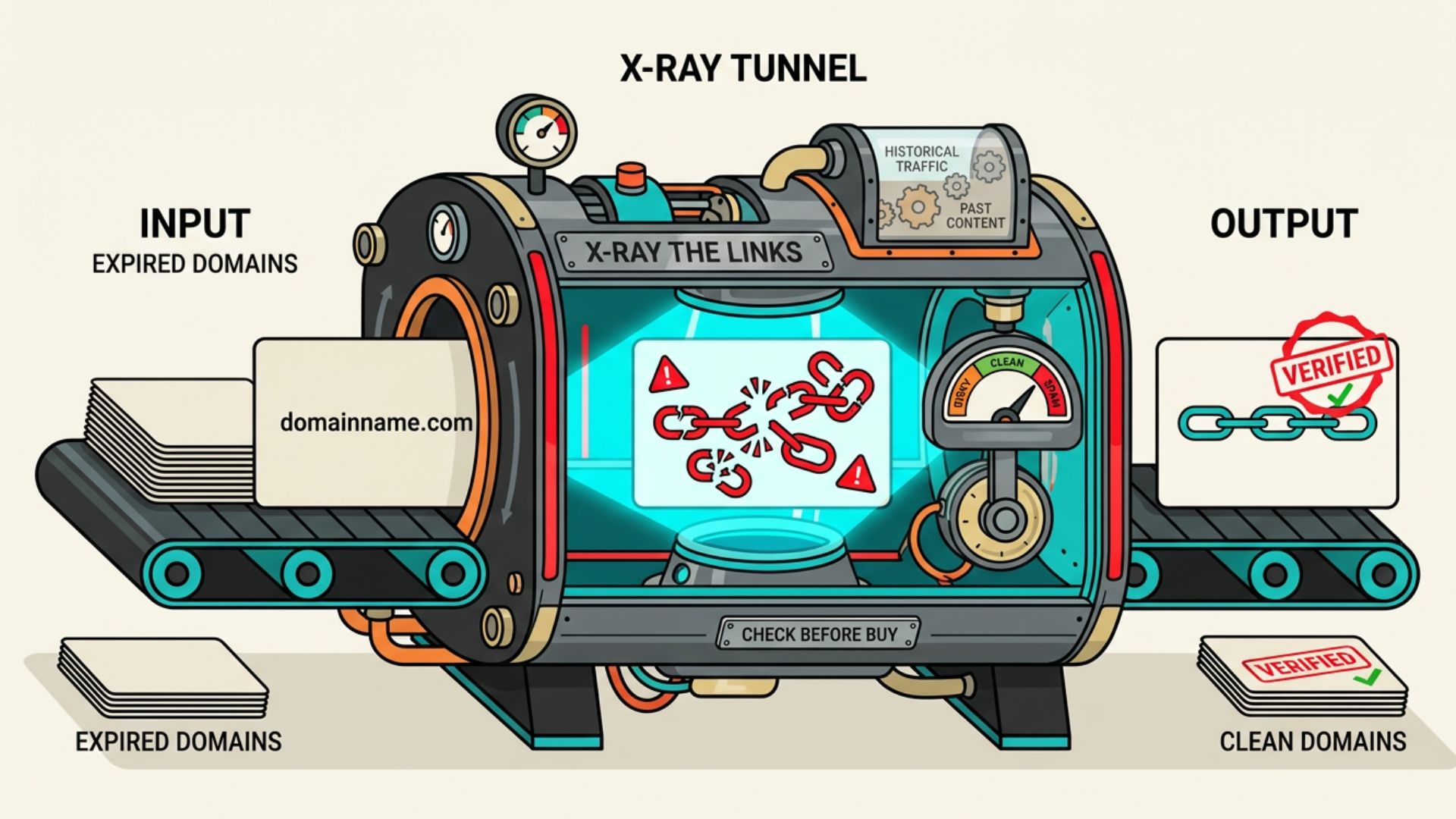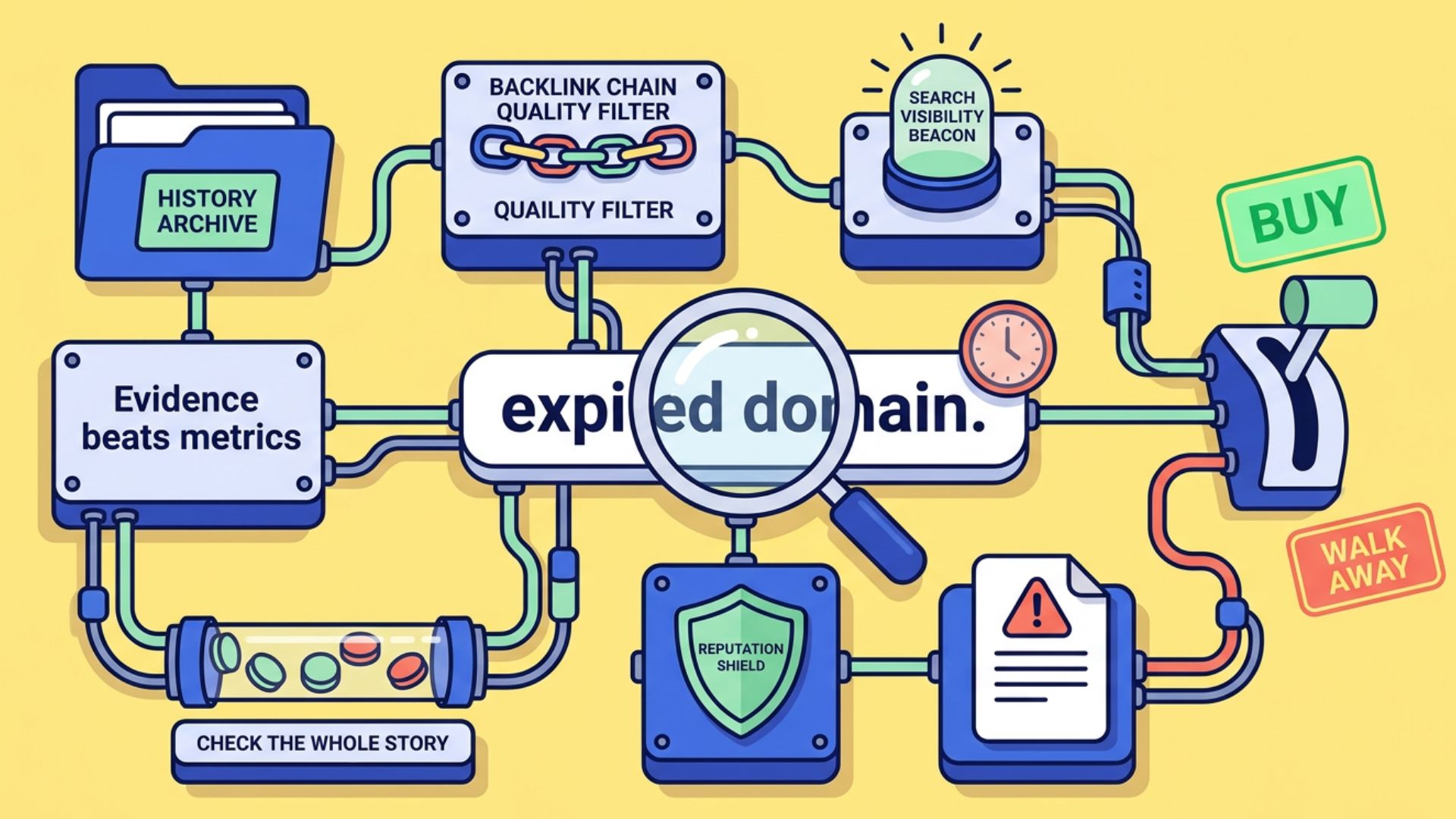
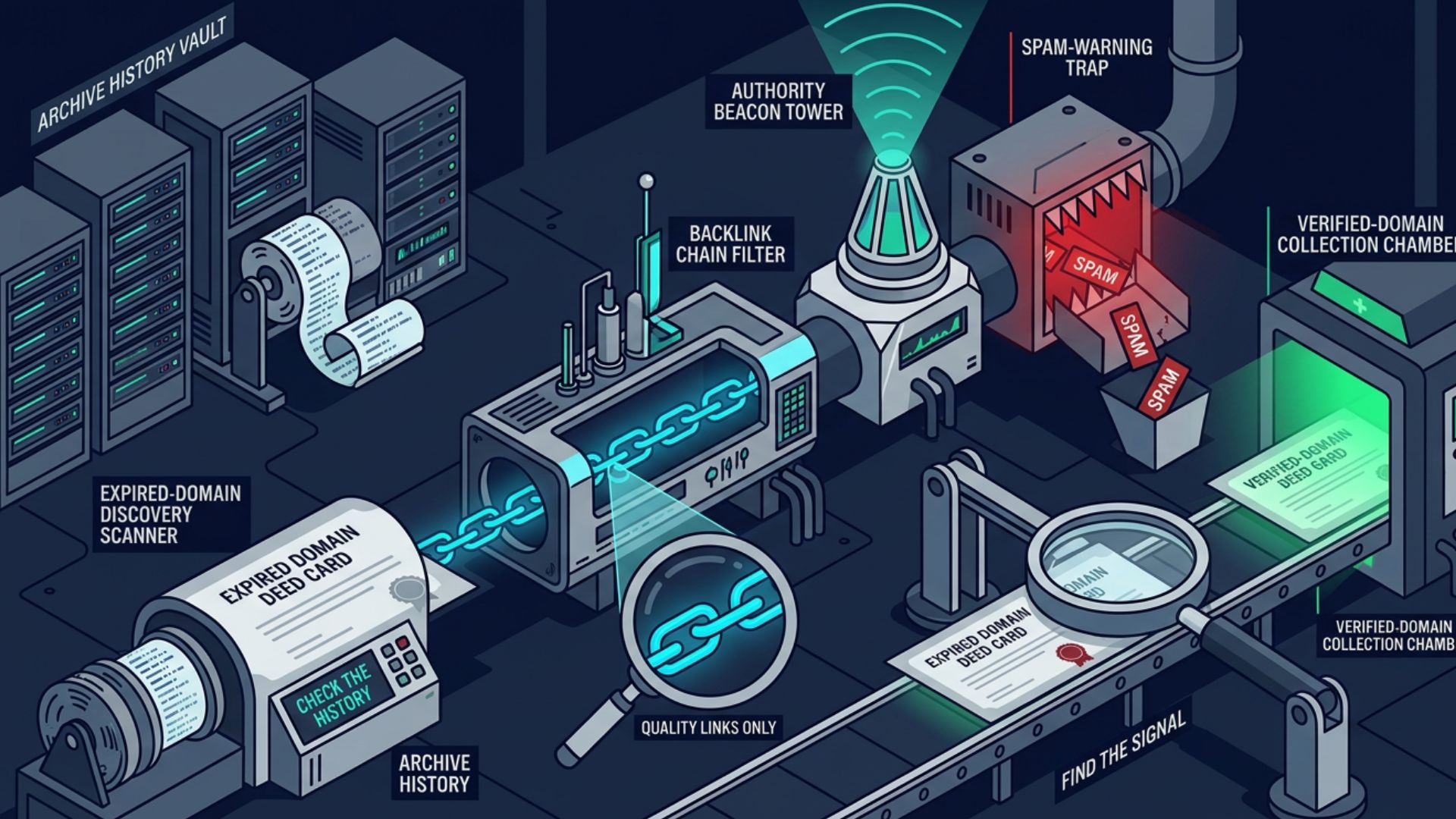
Finding a high-authority expired domain can save time when building a website with an established history and existing backlinks. However, impressive metrics alone do not guarantee real value. A high DR, DA, or backlink count can hide spam, irrelevant links, or a problematic history. The key is knowing where to find promising candidates and how to evaluate what is behind the numbers. This guide walks through a practical process for finding and vetting expired domains before deciding whether they are worth buying.
What Makes an Expired Domain High Authority?
A high-authority expired domain is more than one with a high DR, DA, or Trust Flow score. These third-party metrics can help identify promising candidates, but they do not guarantee quality or SEO value.
A stronger candidate typically has a healthy combination of relevant referring domains, natural backlinks, legitimate historical use, and a clear topical connection between its past and intended future use. Important links should also still be live and come from credible sources.
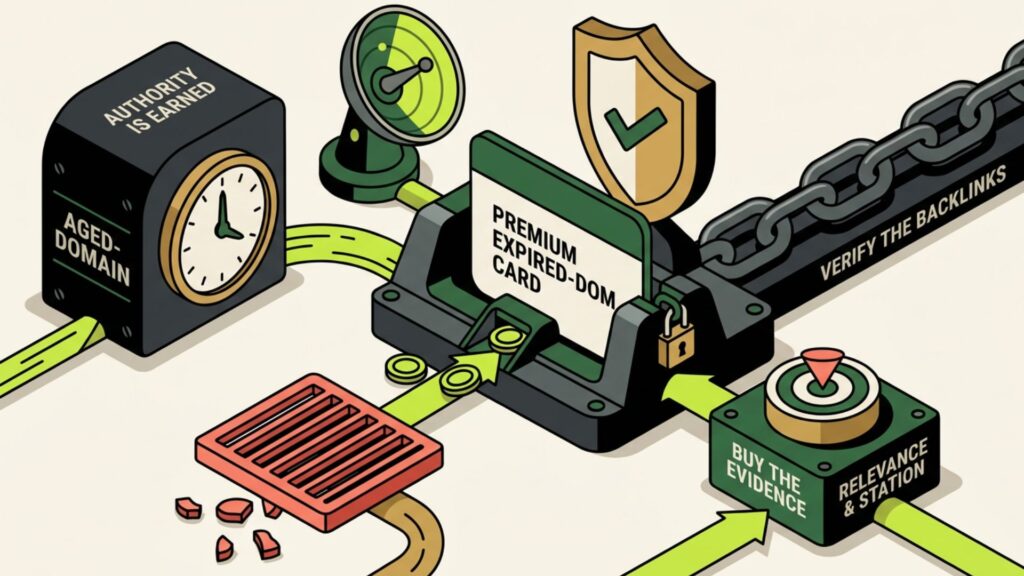
The key is to look beyond the numbers. Authority metrics are useful for screening candidates, but the backlink profile, history, relevance, and potential risks ultimately determine whether one is worth considering.
Start With the Right Sources for Finding Expired Domains
The first step is finding a large pool of potential candidates. Different sources list names at various stages of the expiration process, so knowing where to look can help you find opportunities before they become widely available.
Expired Domain Databases
Expired domain databases collect names that are expiring, in auction, pending deletion, or recently dropped. These platforms usually provide filters for metrics such as backlinks, referring domains, age, and third-party authority scores, making it easier to narrow a large list.
Domain Auctions and Marketplaces
Auctions and Expired domain marketplaces can also offer established names before or after they become publicly available. These options may provide access to candidates with stronger histories or backlink profiles, but competition can drive up prices.
Regardless of where you search, treat the initial list as a starting point. The next steps focus on filtering and verifying whether a candidate’s apparent authority is worth pursuing.
Use Metrics to Filter Candidates, Not Make the Final Decision
Once you have a list of potential candidates, use SEO metrics to narrow it down. Domain Rating (DR), Domain Authority (DA), Trust Flow (TF), Citation Flow (CF), referring domains, and historical traffic can help identify names worth investigating further.
However, no single metric can determine whether an investment is a good one. A high score may come from irrelevant, low-quality, or manipulated links, while a lower-scoring candidate may have a cleaner and more relevant backlink profile.
Use these metrics as an initial filter to compare opportunities and remove obvious weak candidates. Then examine the factors behind the numbers, including where the backlinks come from, how the site was previously used, and whether its history fits your intended project.
Check the Referring Domains Behind the Metrics
A strong authority score is only useful if it is supported by a healthy backlink profile. Instead of focusing solely on the total number of backlinks, consider the websites linking to the candidate.
Check whether the referring domains are credible, relevant to its historical topic, and reasonably diverse. A large number of links from a few websites, low-quality directories, or unrelated sources may inflate the numbers without providing much real value.
Pay attention to the quality of the strongest referring sites and the context of their links. A smaller profile with relevant, editorial links can be more valuable than thousands of backlinks from weak or unrelated sources. This review helps reveal whether the authority metrics reflect genuine link equity or a profile that requires closer scrutiny.
Audit the Actual Backlinks
After reviewing the websites linking to a candidate, examine the backlinks themselves. Look at the pages that earned the strongest links and check whether those links are still live, relevant, and placed naturally within useful content.
Pay attention to the type of link as well. Contextual editorial links are generally more meaningful than large numbers of sitewide footer links, automated directories, or other low-quality placements. Also check which URLs the backlinks originally pointed to. If important links lead to specific pages, consider whether those pages can be reasonably recreated or replaced after acquisition.
This deeper review helps determine whether the backlink profile contains genuine value or simply looks strong at a glance.
Review Anchor Text for Signs of Manipulation
Anchor text can provide useful context about how other websites linked to a candidate in the past. A natural profile often includes a mix of branded terms, URLs, descriptive phrases, and other relevant wording.
Look more closely at profiles dominated by repetitive exact-match commercial terms, unrelated keywords, or obvious spam phrases. These patterns may indicate aggressive link building or previous misuse.
Anchor text should not be used as a standalone quality test. Review it alongside the referring domains, actual backlinks, and historical use to build a clearer picture of whether the site’s authority was earned naturally.
Investigate the Domain’s History
Before buying, investigate how the website was used over time. Archived versions of the site can reveal its previous topics, content, and major changes in ownership or purpose.
Look for a reasonably consistent history. Frequent shifts between unrelated topics, periods filled with thin or spammy content, or sudden changes to mass redirects can be warning signs. A legitimate site may evolve over time, but its history should help explain why it earned its backlinks and authority in the first place.
Reviewing past versions also helps you understand which pages and topics attracted valuable links. This information can be useful when deciding whether the site’s previous history aligns with your intended project.
Check Whether the Domain Fits Your Intended Website
A strong backlink profile is not enough if the candidate has no meaningful connection to the website you plan to build. Review its historical topic, the content that earned its strongest links, and the context in which other sites linked to it.
For example, a former technology publication may be a more suitable foundation for a new technology-focused site than an unrelated online store. The closer the connection between the site’s past and future purpose, the easier it is to understand why existing backlinks remain relevant.
This does not mean a new project must exactly replicate the previous website. However, major shifts into completely unrelated topics can reduce the practical value of its history and create a less natural transition for users and linking websites.
Look for Red Flags Before Buying
Even a candidate with strong metrics and reputable backlinks can have issues that make it a poor choice. Before making an offer, watch for these red flags:
- Spam or manipulated link profiles: Sudden backlink spikes, a large number of links from low-quality or unrelated websites, or repetitive, spam-heavy anchor text may require closer investigation.
- Problematic historical use: Archived versions may reveal spam, scraped or mass-generated content, repeated shifts between unrelated topics, or suspicious redirects.
- Trademark or brand risks: Check whether the name includes a protected trademark or could create confusion with an existing business or brand.
A few warning signs do not automatically make a candidate unusable. Consider them alongside its backlink quality, history, intended use, and asking price before making a final decision.
Shortlist Candidates and Compare Them Before Making an Offer
Avoid buying the first candidate with an impressive DR, DA, or backlink count. Shortlist several options and compare the factors that matter most, including:
- Backlink quality: Are the strongest links relevant, credible, and still live?
- Referring-domain relevance: Do the linking websites relate to the site’s historical topic?
- Historical consistency: Does its past show legitimate and reasonably consistent use?
- Topical fit: Does the previous website have a logical connection to your planned project?
- Traffic or visibility: If data is available, does it show meaningful organic traffic or search visibility?
- Potential risks: Are there signs of spam, manipulation, problematic past use, or trademark issues?
- Price: Is the asking price reasonable based on the overall quality and risk?
The strongest option is not necessarily the one with the highest authority metric. Compare the full picture and prioritize the candidate that offers the best combination of relevant backlinks, a clean history, topical fit, and reasonable value.
Conclusion
Finding high-authority expired domains is not about choosing the one with the highest DR, DA, or backlink count. Those metrics can help identify promising candidates, but they do not reveal the full picture.
The best approach is to find potential options, filter them efficiently, and then examine the evidence behind their metrics. Review the referring domains, actual backlinks, anchor text, historical use, topical relevance, and potential risks before making a purchase.
A careful evaluation process takes more time, but it can help you avoid paying for inflated metrics or a problematic history. Focus on the overall quality of each candidate rather than on a single impressive number.