
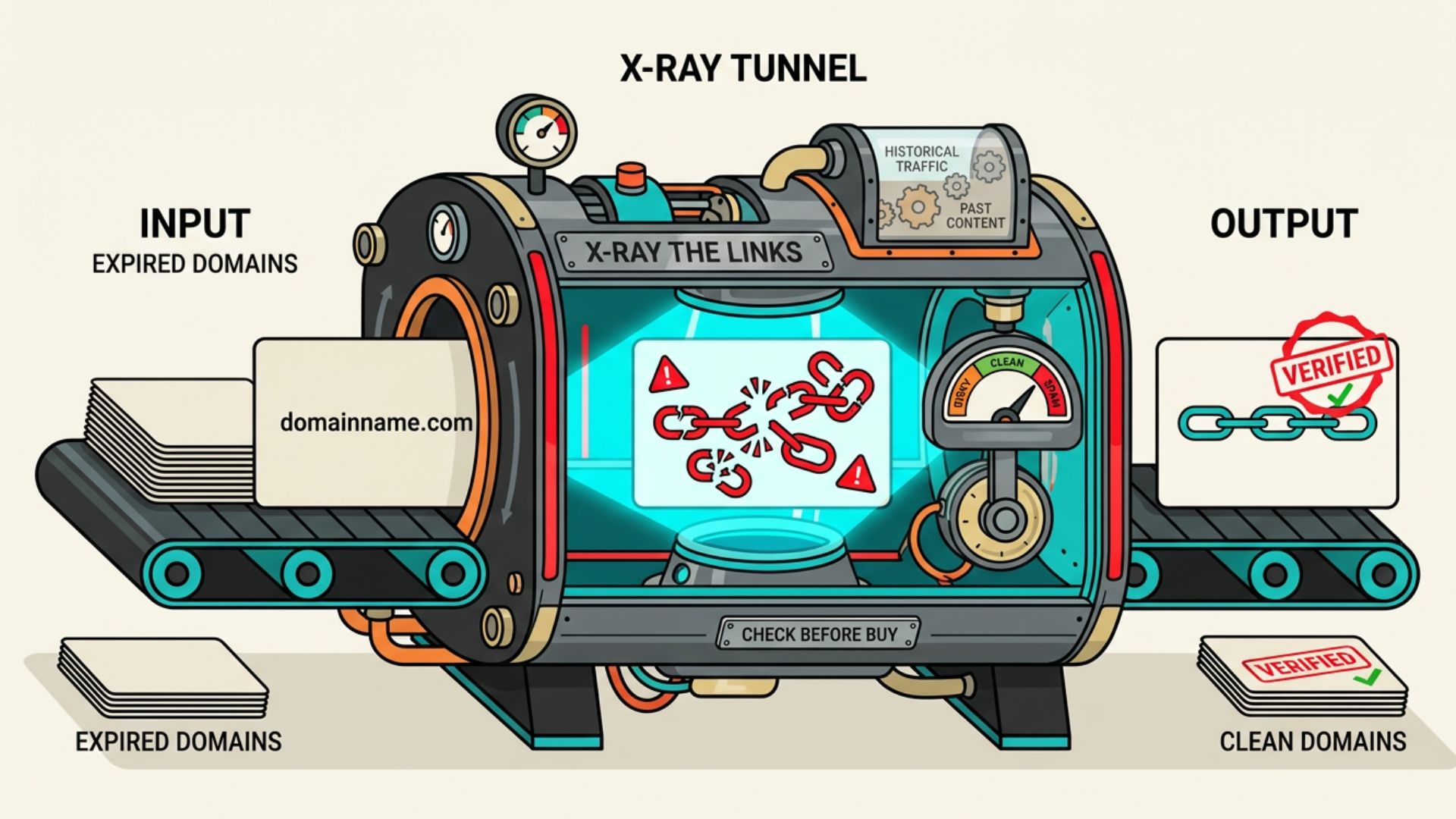
An expired domain can look like a valuable opportunity, especially when it has strong backlinks or established authority. However, those metrics do not reveal the full story. A domain may also carry a history of spam, manipulative link building, or other questionable use that could affect its value. That is why a proper spam check should go beyond a single score. By reviewing key signals before buying, you can better understand the domain’s history and identify potential red flags.
What Are You Actually Checking For?
The purpose of a spam check is to determine whether an expired domain’s existing SEO value was built through legitimate activity or influenced by manipulative practices.
That distinction is important because an expired domain can contain a mix of good and bad signals. A legitimate website may have accumulated a few low-quality backlinks over the years, while a domain with a serious spam history may still retain links that appear valuable at first glance. The goal, therefore, is not to find a completely flawless backlink profile. It is to identify evidence of deliberate or sustained manipulation and decide whether it represents an isolated problem or a pattern that affects the domain’s overall value.
Run an Initial Spam Check
The first check should give you a quick picture of the domain’s existing SEO footprint and highlight anything that deserves a closer look. At this stage, the goal is not to decide whether the domain is safe to buy. It is to identify unusual data before spending time on a deeper review.
Start by checking available spam or toxicity indicators alongside basic backlink and referring domain data. Look for obvious inconsistencies, such as a large number of backlinks coming from very few referring domains, unusually high spam warnings, or link growth that does not appear to match the domain’s history.
These signals are only starting points. A warning does not automatically mean the domain is unusable, but it tells you where to investigate next.
What to Look for During the Initial Check
- A high spam or toxicity warning that requires further review
- An unusually large number of backlinks from a small number of referring domains
- A backlink profile dominated by obviously irrelevant or low-quality sites
- Sudden or unexplained spikes in backlinks or referring domains
- Link activity that appears inconsistent with the domain’s known history
Examine Where the Domain’s Links Came From
A large backlink count does not necessarily make an expired domain valuable. Start by looking at the referring domains behind those links and whether they make sense for the site’s former purpose. Legitimate references may come from relevant businesses, publications, organizations, or resources, while a profile dominated by unrelated or clearly low-quality sites deserves closer scrutiny. Also examine repetitive links, sitewide placements, and links from pages that appear to exist mainly to influence search rankings.
Historical link data can provide additional context when available. A sudden increase in backlinks or referring domains is not automatically evidence of spam, but it becomes more concerning when the links are irrelevant, heavily repetitive, or appear during a period of suspicious website activity. The goal is not to find a perfectly clean profile, since older domains can naturally accumulate questionable links. What matters is whether those links are isolated noise or a significant part of the domain’s remaining SEO footprint.
Investigate How the Domain Was Previously Used
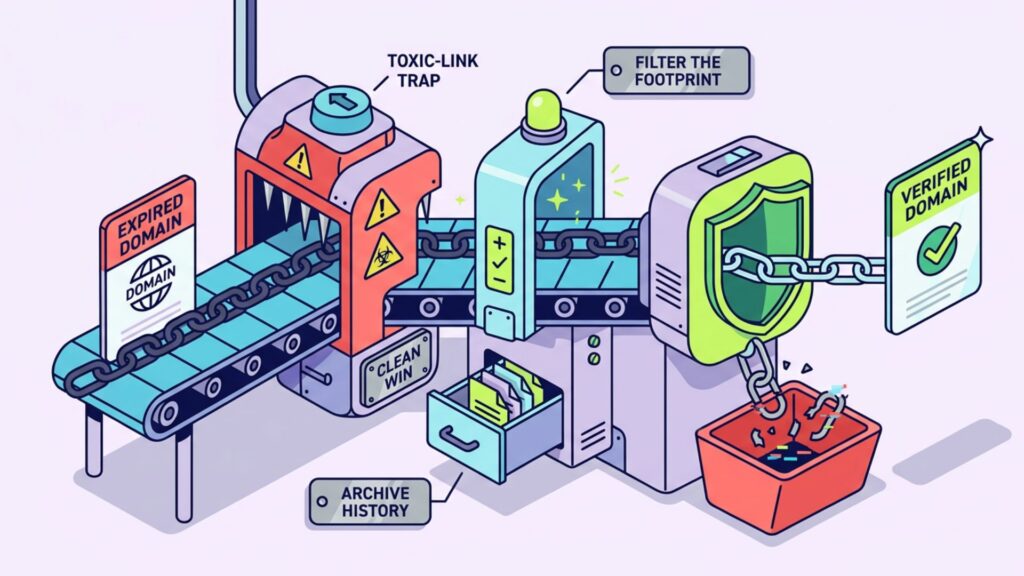
Backlinks can show how a domain was referenced, but they cannot tell you everything about what happened on the site itself. Review archived versions to establish the website’s original purpose, then check for significant changes in content, topic, or use over time. A change in direction is not automatically a problem, but periods where a legitimate site was replaced with keyword-heavy, automatically generated, or completely unrelated content deserve closer attention.
Look beyond the homepage when possible. Spam may have existed on specific URLs, subdirectories, or large groups of similarly structured pages, while unrelated redirects may indicate attempts to use the domain’s existing authority to benefit another site. The key is to compare what you find with the domain’s broader history. When suspicious content or redirects appear alongside unusual backlink activity from the same period, the evidence is more meaningful than any isolated red flag.
Investigate the Data Behind Spam and Authority Metrics
Spam, toxicity, and authority metrics can help identify domains that need closer review, but they should not be treated as final judgments. A high Spam Score or Toxicity Score does not automatically mean a domain is unusable, just as strong DR, DA, Trust Flow, or Citation Flow does not prove that a domain’s link profile is healthy. These are third-party measurements based on each tool’s own methodology, not a direct statement of how Google evaluates the domain.
When a metric raises a concern, use it as a starting point for investigation. Check which backlinks, referring domains, or other signals may be contributing to the score, then compare those findings with the domain’s history and link profile. A metric is most useful when it helps you find evidence that deserves attention rather than replacing the review itself.
Make the Final Call Before Buying
After reviewing the domain’s link profile, historical use, and spam-related metrics, look at how the findings fit together. A few questionable backlinks or a high spam-related score do not automatically make a domain worthless. The key is whether suspicious signals are isolated or form a consistent pattern that suggests manipulative or abusive use.
Before buying an expired domain, weigh the findings against the overall evidence:
- Consider the domain further when its history appears legitimate, most backlinks are relevant or explainable, and suspicious signals are limited.
- Investigate more closely when the data is mixed, such as unexplained link spikes, questionable anchors, or gaps in the domain’s history.
- Walk away when multiple signals point to the same problem, including spammy backlinks, manipulated anchor text, suspicious historical content, or clear evidence of repeated abuse.
The final decision should be based on the complete picture, not the domain’s strongest authority metric or its single worst backlink.
Conclusion
A proper spam check goes beyond entering an expired domain into a spam checker and looking at the score. The more useful approach is to investigate the evidence behind it, including where its links came from, how the domain was previously used, and what may be causing any spam-related warnings.
No expired domain will necessarily have a perfect history or backlink profile. What matters is whether the issues you find are isolated or part of a broader pattern of manipulation or abuse. By looking at the full picture before buying, you can make a more informed decision about whether the domain’s existing SEO value is worth keeping or the risks are too significant to ignore.