
Choosing a domain extension feels like a small decision, but it carries more weight than most website owners initially realize. The extension at the end of your URL, commonly called a top-level domain (TLD), conveys something about your site before a visitor ever clicks on it. It signals where you are, who you are, and in some contexts, what kind of organization is behind the content. Getting this choice right from the start saves considerable effort later.
The relationship between domain extensions and SEO is widely misunderstood. Many site owners assume that picking the “wrong” extension will tank their rankings, while others dismiss TLDs as entirely irrelevant. The reality sits somewhere in between. Google does not directly reward or penalize sites based on their extension alone, but the extension influences user behavior, geographic targeting, and brand perception in ways that ripple into organic search performance over time.
What Google Actually Says About Domain Extensions
Google’s official stance has been consistent for years: all generic top-level domains are treated equally in its ranking systems. A well-built site on a .net or .shop domain has the same theoretical opportunity to rank as one on a .com. The algorithm evaluates relevance, authority, content quality, and user signals, not the label after the dot.
That said, Google does make one notable distinction with country-code top-level domains, or ccTLDs. Extensions like .de (Germany), .fr (France), and .ca (Canada) are treated as strong geographic signals. When Google detects a ccTLD, it associates the site with that specific country and prioritizes it accordingly in local search results. This is intentional behavior, not a side effect.
The practical implication is that a generic TLD like .com is geographically neutral, making it suitable for audiences in any country. A ccTLD tells Google where the site belongs. That clarity can be a strength or a limitation depending on your target market.
Google has also confirmed that newer generic extensions like .xyz, .click, or .top are treated the same as legacy ones in algorithmic terms. However, some of these extensions have been heavily exploited by spam networks, which means user trust, not algorithmic preference, becomes the real differentiator.
How .com Became the Default Standard
The .com extension was originally designated for commercial entities when the domain name system launched in 1985. Over the following decades, its use expanded far beyond commerce, becoming the default expectation for nearly any type of website. Today, it is the most-registered TLD in the world by a significant margin, with hundreds of millions of active .com domains.
From a pure SEO standpoint, .com holds no algorithmic advantage. What it does hold is cultural familiarity. Research on user behavior consistently shows that people are more likely to trust and click on a .com link when they see it in search results alongside alternatives. That click-through rate difference, even a small one, feeds into engagement metrics that Google monitors as indirect quality signals.
There is also a memorability factor worth considering. When people hear a web address spoken aloud or read it in print, they tend to assume a .com ending. Owning the .com version of your brand name protects against lost direct traffic that might otherwise land on a competitor or a parked domain. This is part of why aged .com domains with an existing backlink profile and clean history are among the most sought-after assets in competitive SEO, since they combine name recognition with pre-built authority.
The scarcity of desirable .com names is real, and it pushes many businesses toward expired domains. A previously registered .com that was once operated by a legitimate business can carry years of indexed history, an established backlink profile, and residual trust that a brand-new registration simply cannot replicate.
The Role of Country-Code Domains in Local SEO
Country-code TLDs are among the most powerful tools for businesses targeting a specific national audience. A .co.uk domain sends a clear signal to both Google and users that the site is intended for people in the United Kingdom. This geographic association often translates into stronger visibility within that country’s search results, even when competing against globally authoritative domains.
For a business whose entire customer base is local, a ccTLD is a logical choice. A business in Berlin operating on a .de domain benefits from immediate geographic context that a .com would require additional configuration to replicate through tools like hreflang tags or Search Console’s geo-targeting settings.
The trade-off is reach. A ccTLD that performs well locally may struggle to generate impressions in other countries because search engines interpret it as geographically restricted. For businesses with international ambitions, a common solution is to use a .com as the primary global domain while acquiring ccTLDs for specific markets. Expired ccTLDs with existing regional backlinks are particularly valuable in this context, as they arrive with built-in local authority that can significantly compress the time it takes to gain visibility in a new market.
It is also worth noting that some ccTLDs have been adopted widely beyond their original geographic context. The .io extension belongs technically to the British Indian Ocean Territory, but the tech industry has used it so widely that Google now treats it more like a generic TLD in practice, allowing .io sites to rank globally without geographic restriction.
New Generic TLDs: Opportunity or Obstacle?
Since ICANN opened up the domain extension system starting around 2012, hundreds of new generic TLDs have become available. Extensions like .shop, .tech, .agency, .blog, and .design give businesses the ability to embed a descriptor directly into their domain name. A company called Atlas running on atlas.tech communicates its industry without a single extra word.

From a branding perspective, these extensions can be genuinely useful. They help differentiate a business in a crowded space, particularly when the desired .com version is already taken or prohibitively expensive. For startups and niche businesses, a well-chosen new gTLD can make a domain name cleaner and more memorable than a forced compromise on a traditional extension.
The SEO concern with newer extensions is not algorithmic but behavioral. Users encountering an unfamiliar extension in search results are sometimes hesitant to click, which can suppress click-through rates and reduce the indirect performance gains that come from strong engagement. This effect diminishes as specific extensions build recognition over time, but it is a real consideration when choosing between an available new gTLD and a less ideal but trusted alternative.
Extensions That Carry Built-In Trust Signals
A handful of extensions beyond .com come with strong implicit associations that work in a site’s favor. The .org extension was originally intended for non-profit organizations, and while its use is no longer restricted to that sector, public perception still associates it with credibility and public-interest work. Educational institutions, advocacy groups, and open-source projects benefit from this association, as users tend to view .org sites as authoritative and objective.
The .edu extension carries even stronger credibility signals, though it is restricted to accredited educational institutions in the United States. Sites that earn backlinks from .edu domains benefit from the authority those domains carry, which is a separate but related consideration for any SEO strategy.
The .gov extension is similarly restricted, reserved for government entities in the United States, and carries the highest trust factor of any extension. For most website owners, these restricted extensions are out of reach, but understanding their value clarifies why authority and trust, not just technical ranking factors, matter so much in domain strategy. It also explains the logic behind acquiring aged domains that have accumulated links from these types of sources over time.
The Indirect SEO Cost of Spam-Associated Extensions
Not all extensions carry neutral or positive associations. Some TLDs have developed reputations for low-quality or malicious content simply because they were cheap to register and widely abused by spam operators. Extensions like .xyz, .top, .click, and .loan have appeared frequently in phishing campaigns and low-effort content farms, which has made both users and email filters wary of them.
The SEO damage here is indirect but measurable. If users scroll past a domain extension they associate with spam, the site loses clicks even when its content is entirely legitimate. Lower click-through rates in search results can suppress rankings over time, as engagement data contributes to how Google evaluates relevance. Email deliverability can also suffer, which affects marketing campaigns tied to the domain.
Reputable brands have successfully operated on some of these extensions by investing in strong content and brand recognition to overcome the initial perception barrier. That is a possible path, but it requires additional effort compared to starting with a more trusted extension. For most new sites, avoiding extensions with known spam histories is the simpler approach, and when buying within these extension categories on the secondary market, verifying clean domain history becomes especially important.
Building a Domain Strategy That Supports Long-Term SEO
A thoughtful domain extension strategy treats the TLD as one piece of a larger technical and branding framework. For most businesses building a global presence, securing the .com version of the brand name remains the strongest starting point. If the .com is unavailable, established alternatives like .net or .co are reliable next options, followed by industry-specific new gTLDs that align closely with the brand’s positioning.
Businesses targeting specific countries should strongly consider ccTLDs for those markets, either as standalone domains or alongside a primary .com. When using multiple domains, canonical tags and proper redirect structures help prevent duplicate content issues, consolidate link equity onto the intended primary domain, and avoid creating an unnecessary SEO footprint. This multi-domain approach is also a smart brand protection move, ensuring that competitors cannot register close variations of your name across different extensions.
Pairing the right domain extension with consistent content quality, strong backlinks, and solid technical SEO will outperform any attempt to optimize through TLD selection alone. The extension sets the foundation, but what happens on the site determines how far it climbs in search results.
Your Domain Extension Is a Long-Term Brand Decision
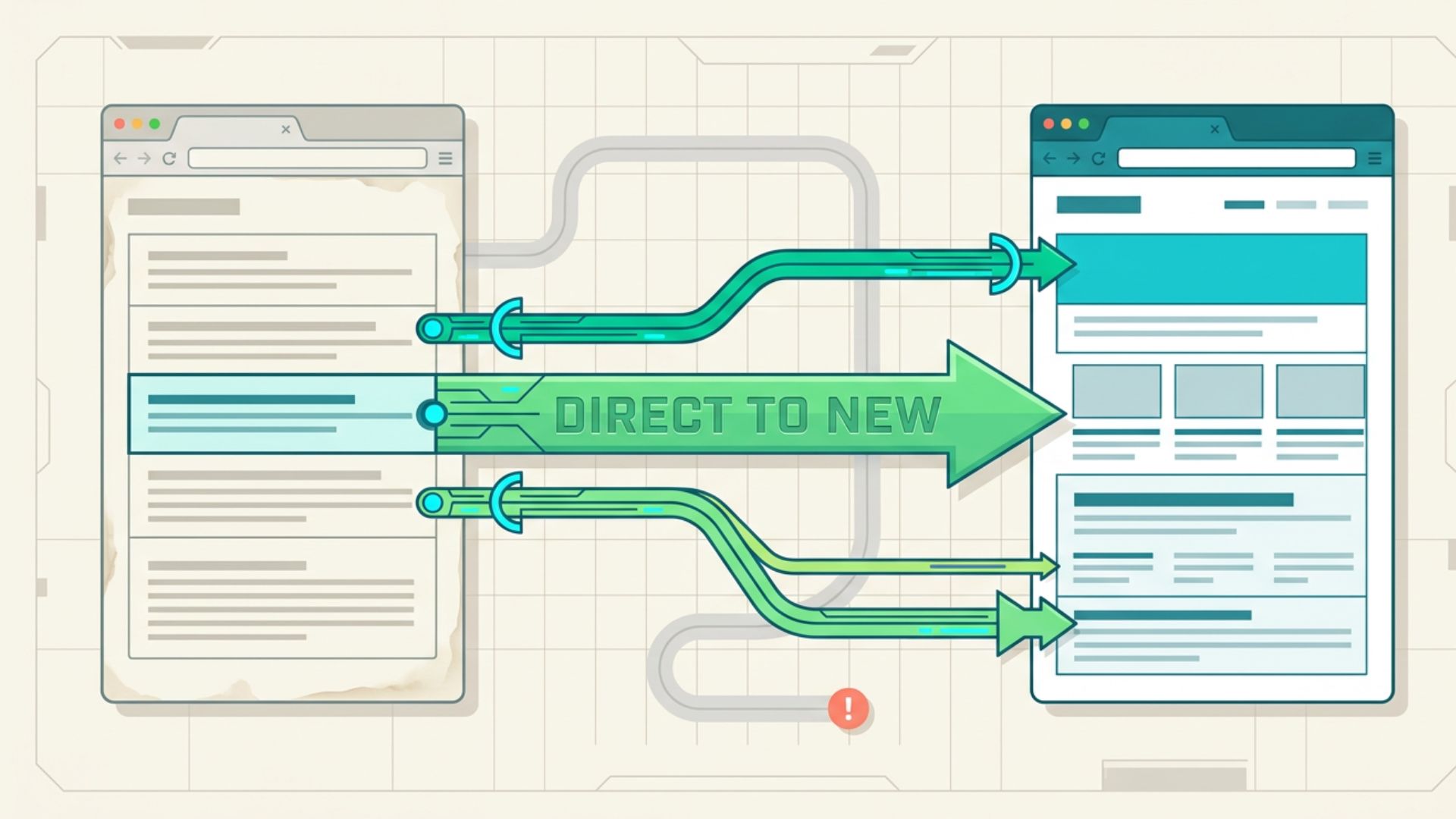
The decision most website owners eventually regret is not choosing a “wrong” extension so much as choosing hastily without thinking about how the domain will represent the brand years down the line. Changing a domain later is possible but disruptive, involving careful redirects, potential loss of link equity, and a period of ranking volatility that can affect revenue.
Treating the domain extension as part of the brand identity from the beginning, rather than a technical afterthought, leads to better outcomes. A memorable domain, appropriate for the audience, and free from spam associations quietly supports every other SEO effort made over the life of the site. Whether selecting a fresh registration or acquiring an aged domain with an established history, the best extension is the one that best matches where you are, who you serve, and where you intend to go.